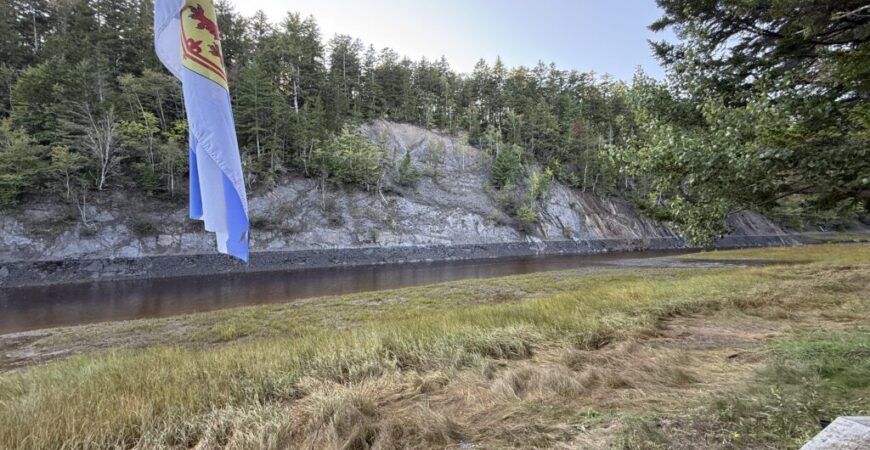
A beautiful house. Five acres. Ocean views. No neighbours in sight.
And the price is considerably less than what you expected to spend.
Welcome to rural Nova Scotia.
There are some incredible opportunities outside our larger centres, particularly throughout Northern Nova Scotia. It’s one of the things I love most about working in communities throughout Colchester and Cumberland Counties, the North Shore and the Fundy Shore.
But here’s the thing: comparing a rural Nova Scotia property to a house on a fully serviced town lot isn’t always apples to apples.
The purchase price is only part of the equation.
When I’m helping someone buy a rural property, especially someone relocating to Nova Scotia, there are a handful of things I want them investigating before deciding whether that seemingly incredible property is actually a good fit.
1. Your Water May Be Your Responsibility
Many rural Nova Scotia properties aren’t connected to municipal water.
Instead, you may have a drilled well, dug well, cistern or another private water source.
That isn’t automatically a negative. Private wells are incredibly common here. But as the homeowner, the water system becomes something you need to understand and maintain.
Before purchasing, I want my buyers asking questions such as:
What type of well is it?
Where is it located?
Is there a well log?
How deep is it?
What is the reported yield?
Has the water recently been tested?
Are there treatment systems installed?
And if there is a treatment system, what is it treating?
Nova Scotia Environment and Climate Change specifically recommends that buyers identify the type of water supply, obtain available well construction information and arrange appropriate water testing through an accredited laboratory.
Don’t assume clear, great tasting water automatically means everything is fine. Water quality and water quantity are two different considerations.
2. Septic Systems Deserve More Attention Than They Get
If you’re coming from a city where everything you’ve owned has been connected to municipal sewer, a septic system can sound intimidating.
It doesn’t have to be.
Approximately 45% of Nova Scotia homes use on site sewage disposal systems, according to the Province.
A typical system includes a septic tank and disposal field. When properly designed, installed and maintained, these systems can function reliably for many years.
What I don’t love is buying one without knowing anything about it.
Ask about its age, location, maintenance history, pumping history and any documentation available for the installation.
The Province recommends pumping a septic tank approximately every two to three years depending on usage.
And yes, depending on the property and circumstances, investigating the septic system during your due diligence period can be money very well spent.
3. A Private Road Can Change the Math
This one surprises buyers.
That gorgeous secluded property may be accessed by a private road.
So who maintains it?
Who plows it?
Who pays when the road washes out?
Is there a formal road maintenance agreement?
Do multiple owners share the expense?
Is your right to use the road actually documented?
And can your lender and insurer work with the property’s access arrangement?
A private road isn’t necessarily a reason to walk away. Plenty of fantastic Nova Scotia properties are located on them.
I simply want you to understand exactly what you’re buying before you buy it.
4. Heating a Rural Nova Scotia Home Is Worth Investigating
One house may have electric baseboards.
The next has heat pumps.
The next has oil fired hot water heat and a wood stove.
And then we find the classic Nova Scotia special with three different heating systems that have apparently been assembled over several decades.
Welcome. 😂
Don’t look only at the home’s square footage when estimating operating costs.
Ask for historical heating information where available and look at the age and condition of the equipment.
A large older farmhouse with limited insulation can behave very differently from a newer, energy efficient home of the same size.
5. Internet and Cell Service Can Matter More Than You Think
Please don’t assume.
Especially if you’re moving here and planning to work remotely.
Internet availability can vary significantly from one rural location to another. The fact that the house five minutes away has excellent internet doesn’t automatically tell us what is available at the property you’re considering.
Before removing conditions, verify the service available at the actual address with the provider.
The same goes for cell reception.
If reliable connectivity is essential to your job or lifestyle, this belongs on the due diligence list, not the “we’ll figure it out after closing” list.
6. Your Driveway May Basically Be a Small Road
A 300 metre driveway through the woods sounds dreamy.
And honestly? It can be.
Until February.
Long rural driveways can mean additional costs for snow removal, gravel, grading, drainage, culverts and occasional repairs.
Again, none of this makes the property bad.
It simply means the two acre rural property and the quarter acre serviced property may have very different ongoing expenses.
7. Generators and Power Outages Are Worth Talking About
The further you move into rural Nova Scotia, the more I’d want to understand your backup plan.
Does the property have a generator?
Is it portable or permanently installed?
What systems can it operate?
If the power goes out, does that also mean you lose your water pump?
How is the home heated during an outage?
These aren’t particularly glamorous questions, but they’re very useful ones to ask before closing.
8. Don’t Assume You Can Do Whatever You Want With the Land
This is a BIG one.
You buy ten acres.
Surely you can subdivide it, build another house, operate a business, add several rental cabins or put a tiny home in the backyard…right?
Maybe.
But acreage doesn’t automatically equal development potential.
Depending on the property, zoning, subdivision regulations, road frontage, access, septic suitability, wetlands, watercourses and municipal requirements can all affect what you’re able to do.
If future development is part of the reason you’re buying the property, investigate it before purchasing rather than assuming it will work afterward.
9. Waterfront and Water Access Require Their Own Due Diligence
“Ocean access” can mean very different things.
The property might be directly waterfront.
It might have deeded access over another parcel.
There could be a right of way.
There could be shared access.
Or there may simply be a public beach nearby.
Those aren’t interchangeable.
I want to understand what is actually on title and what rights transfer with the property.
Coastal properties also deserve additional investigation regarding erosion, flooding and drainage. Nova Scotia’s real estate property disclosure forms were updated in 2025 to allow buyers to request disclosure regarding coastal flooding, coastal erosion, general flooding, pooling and drainage issues.
An ocean view is gorgeous.
The legal and physical details still matter.
10. Outbuildings Aren’t Automatically an Asset
Barns, workshops, garages and sheds can add enormous value to the right property.
They can also add enormous repair bills.
Look at foundations, roofs, electrical systems and structural condition rather than assigning value simply because the buildings exist.
That 100 year old barn might be exactly what you’ve always wanted.
Or it may be an extremely picturesque future pile of lumber.
We want to know which one we’re dealing with.
11. Your Insurance Can Be Different
Before assuming your insurance will be similar to your current home, get a quote.
Factors such as the home’s age, heating system, electrical service, wood stoves, distance from fire services, outbuildings, waterfront exposure and short term rental plans may affect availability or cost.
I’d rather you discover an insurance issue while we still have the ability to deal with it than three days before closing.
So, Is Buying Rural Property in Nova Scotia a Bad Idea?
Absolutely not.
In fact, rural Nova Scotia is where I think some of the most interesting real estate opportunities in the province exist.
You can find privacy, acreage, ocean views, workshops, barns, beaches and lifestyles that would cost dramatically more in many other parts of Canada.
The key is understanding the entire property rather than falling in love with the house alone.
When I look at a rural property with a buyer, I’m not trying to find reasons they shouldn’t buy it.
I’m trying to make sure they know what they’re buying.
Because a property doesn’t need to be perfect to be the right property.
You just shouldn’t discover the expensive surprises after you own it.
Thinking About Moving to Rural Nova Scotia?
I work with buyers throughout Truro, Bible Hill, Colchester County, Cumberland County, Tatamagouche and the North Shore, Parrsboro and the Fundy Shore, and other communities throughout Northern Nova Scotia.
A large part of my business involves rural properties, land, waterfront homes and buyers relocating from outside the area.
If you’re considering making the move, I’m happy to help you figure out not only what you can buy, but what questions we should be asking before you buy it.
Rachel Thibodeau, REALTOR®
RE/MAX County Line Realty Ltd.
902 890 4211
reachrealtorrachel@gmail.com
rachelthibodeau.ca @novascotiarealtorrachel