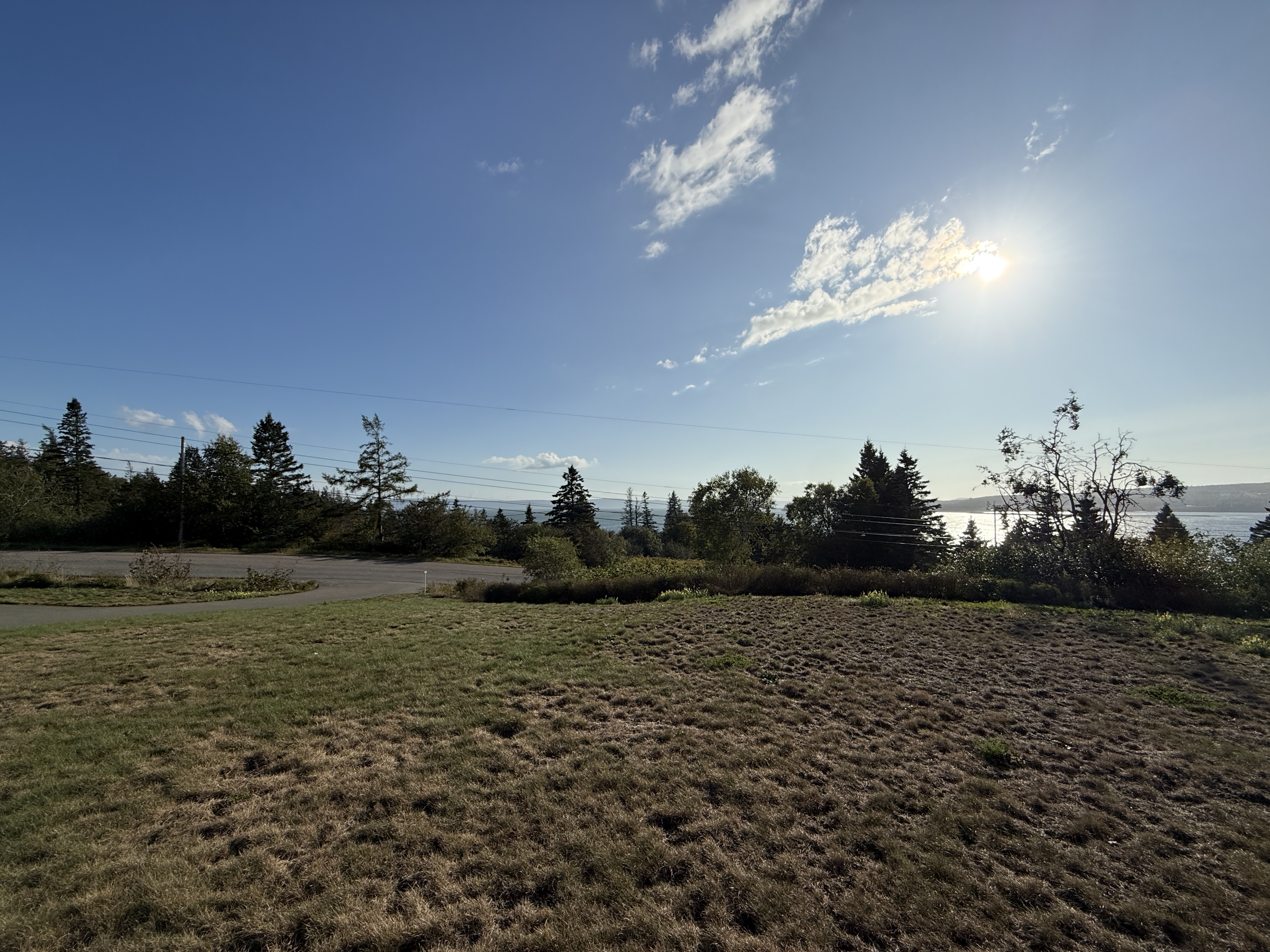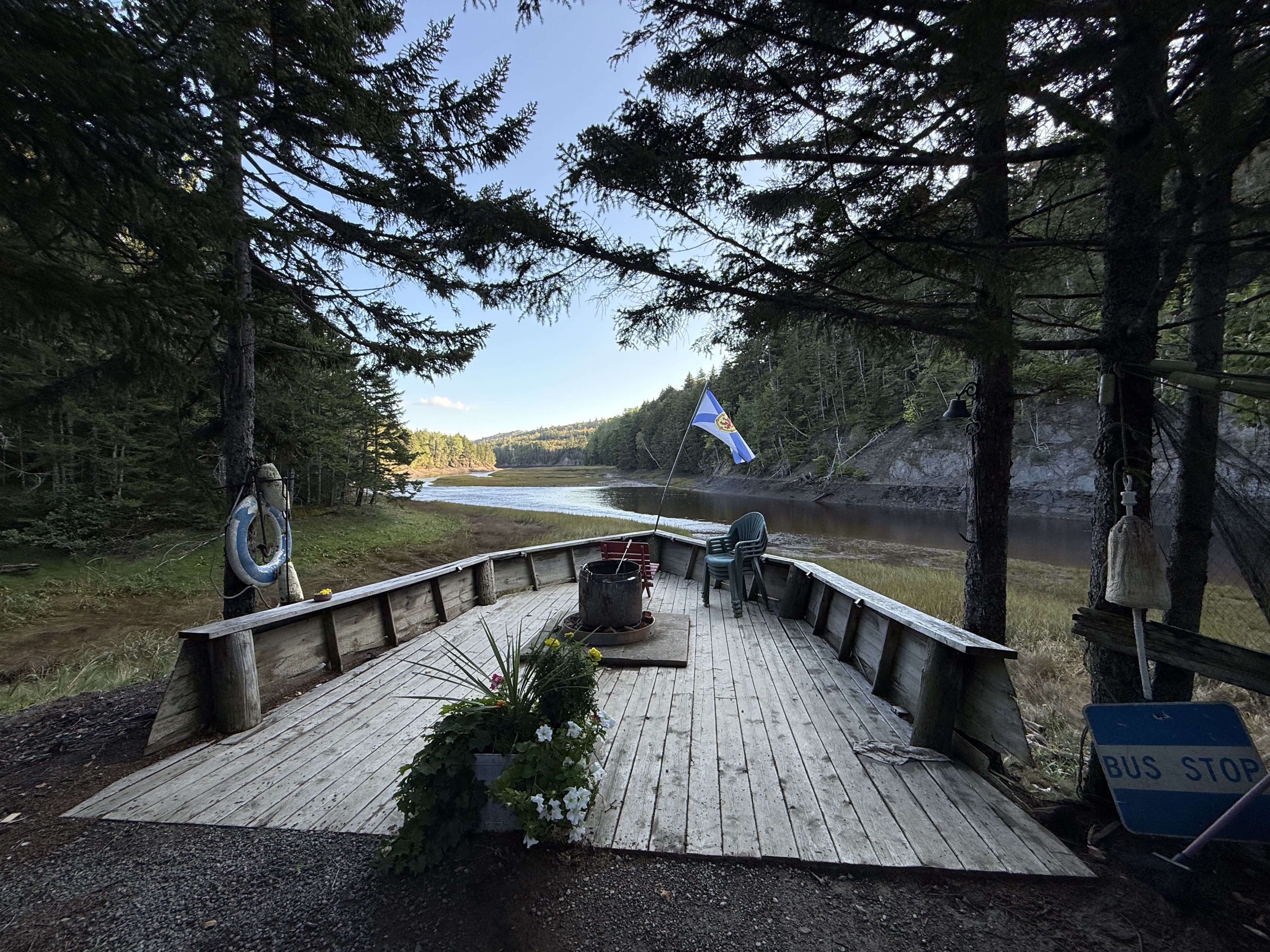
There’s something about pulling into a property, getting out of the car and seeing the ocean.
I get it.
I love it too.
And in Northern Nova Scotia, we have some absolutely incredible waterfront and coastal properties.
But when I’m helping someone buy one, particularly a buyer relocating to Nova Scotia, I want us to look at more than the view.
Because “waterfront” doesn’t tell me nearly enough.
Is it actually waterfront?
Can you get down to the water?
What happens during a major storm?
Is the shoreline changing?
Can you insure it?
Can you build where you want?
Does your deed actually give you the access you think you’re buying?
These aren’t reasons to be afraid of waterfront property.
They’re reasons to understand it.
Here are 12 things I want my buyers investigating before purchasing waterfront or coastal property in Nova Scotia.
1. First, What Kind of “Waterfront” Are We Talking About?
Waterfront.
Oceanfront.
Water view.
Deeded beach access.
Right of way to the water.
Across the road from the beach.
These descriptions can sound similar when you’re scrolling listings, but legally and practically they can mean very different things.
A property with 300 feet of direct shoreline is not the same thing as a property with deeded access over someone else’s land.
And neither is necessarily better.
You may actually prefer the lower maintenance of having beach access without owning the shoreline.
The important part is knowing exactly what you’re buying.
If access to the water is important to you, we need to understand how that access exists and whether it transfers with the property.
2. Can You Actually Get to the Water?
This sounds almost ridiculous.
You’re buying waterfront. Obviously you can get to the water.
Except…not always.
Some waterfront parcels have steep banks, cliffs, marshy shoreline, heavy vegetation or significant tidal changes.
A gorgeous elevated view may come with difficult physical access to the shore.
On the other hand, a gently sloping property may lead directly onto a beautiful beach.
Neither is inherently better.
It depends on why you’re buying waterfront in the first place.
If your dream involves carrying a kayak to the water every morning, let’s make sure that’s actually practical.
3. Check Coastal Flooding Risk
This has become an increasingly important part of purchasing coastal property in Nova Scotia.
The Province has developed a Coastal Hazard Map that allows buyers and property owners to investigate potential coastal flooding and erosion.
It includes information related to current conditions as well as future scenarios.
I would rather have this information before buying than discover after closing that the beautiful low lying portion of the property has a risk we never investigated.
A map isn’t a substitute for professional advice or a property specific investigation, but it gives us another tool for asking better questions.
4. Look at Erosion, Not Just the Current Shoreline
Today’s shoreline doesn’t necessarily tell you what the shoreline looked like 20 years ago or what it may look like in the future.
Look for signs of erosion.
Is the bank exposed?
Are trees falling toward the water?
Is there a seawall?
What condition is it in?
Are neighbouring properties experiencing erosion?
How close are the house, well, septic system, driveway or other structures to the shoreline?
Nova Scotia’s own coastal buying guidance specifically recommends considering erosion history, the distance between structures and an eroding coastline, shoreline vegetation and existing shoreline protection.
Those are questions worth asking.
5. Use Nova Scotia’s Coastal Hazard Tools
This is one resource I particularly want relocation buyers to know exists.
Nova Scotia offers a Coastal Hazard Assessment Report that can provide information about potential coastal flooding and erosion for a specific coastal property.
And it’s currently available at no cost.
There is also an online Coastal Hazard Map.
If I’m buying a significant waterfront property, I want as much property specific information as reasonably available to me.
Beautiful view?
Absolutely.
Data too, please.
6. Find Out What’s Happening With the Well and Septic
A lot of waterfront homes in rural Nova Scotia have private wells and septic systems.
Where are they located relative to the shoreline?
How old is the septic system?
Where is the field?
Is there documentation?
Has the well water been tested?
Is there enough usable land if a septic system ever needs repair or replacement?
This becomes particularly important on smaller waterfront lots where your options may be more physically constrained.
The house isn’t the only thing that needs enough safe, usable land.
7. Understand the Tides
If you’re moving from somewhere without significant tides, welcome to Nova Scotia. 😂
The shoreline you see at 2 p.m. may look very different several hours later.
This is especially important around the Bay of Fundy, where tides are a defining part of the landscape.
A beach can change dramatically between high and low tide.
A boat access point that looks perfect at one point in the day may be something entirely different at another.
If using the water matters to you, don’t just look at it once.
Understand how it behaves.
8. Don’t Assume You Can Build Whatever You Want Near the Shore
Buying waterfront land does not automatically mean you can build your dream home exactly where you want it.
Municipal land use rules, setbacks, environmental considerations, lot characteristics, septic requirements and coastal hazards can all affect development.
This is particularly important with vacant land.
If you’re buying because you envision a house, cottage, additional unit, garage or rental accommodation, investigate whether that plan is realistic before committing.
“I own the land” and “I can build this here” are two different statements.
9. Get an Insurance Quote Before You Fall Too Far in Love
Waterfront homes can have different insurance considerations from inland properties.
Exposure to coastal weather, flooding risk, the age and construction of the home, heating systems, seasonal occupancy and other characteristics can affect insurance.
If obtaining satisfactory insurance is important to your purchase, deal with it during due diligence.
I don’t want your first serious conversation with an insurer happening three days before closing.
10. Think About the Property During a November Storm, Not Just an August Sunset
This might be one of my favourite waterfront buying tests.
It’s incredibly easy to fall in love with coastal Nova Scotia on a beautiful summer afternoon.
But what does the property look like when the wind is coming off the water in November?
How exposed is it?
Are there mature trees near the house?
How does water drain?
Is the driveway vulnerable?
Is there backup power?
Is the home seasonal or properly winterized?
What is access like after a storm?
You don’t need to be scared of coastal weather.
You just need to buy with your eyes open.
11. Understand What You’re Responsible for Along the Shoreline
Owning waterfront doesn’t mean you can automatically alter the shoreline however you want.
If you’re dreaming about building a large wharf, adding fill, constructing shoreline protection or significantly changing the coast, investigate the applicable rules first.
Nova Scotia notes that work below the ordinary high water mark can require permits and may involve additional complexity.
So if a particular waterfront improvement is essential to your plans, make it part of the investigation before purchasing rather than assuming permission will come afterward.
12. Ask Yourself Why You Want Waterfront
This one isn’t legal or technical.
It’s probably the most important question on the list.
What are you actually picturing?
Swimming?
Boating?
Kayaking?
A beach for the kids?
Watching sunsets?
Privacy?
An investment property?
A cottage?
Retirement?
A view from your kitchen window?
Because different waterfront properties deliver completely different lifestyles.
Someone who wants to launch a boat has different priorities from someone who wants a sandy beach.
Someone looking for an investment property may care about completely different things than someone looking for their forever home.
Don’t buy the word waterfront.
Buy the property that gives you the waterfront lifestyle you actually want.
Waterfront Property Isn’t One Category
This is what makes searching for waterfront real estate in Nova Scotia so interesting.
I’ve worked with properties overlooking the Bay of Fundy, properties along the North Shore, deeded beach access properties, oceanfront acreage and homes where the view itself is arguably one of the biggest features.
They’re all different.
And that’s why I don’t think buying waterfront should be approached with a generic checklist alone.
We start with the dream.
Then we investigate the reality.
If those two things line up, that’s when a property gets really exciting.
Thinking About Buying Waterfront Property in Nova Scotia?
I work with buyers and sellers throughout Northern Nova Scotia, including Truro and Colchester County, Tatamagouche and the North Shore, Cumberland County, Parrsboro and the Fundy Shore.
Waterfront, rural properties, land and relocation are a significant part of the work I do.
If you’re searching from outside the area, you don’t need to have the exact community figured out first.
Tell me what you want to do when you walk out your back door.
Beach?
Boat?
Kayak?
Privacy?
A ridiculous ocean view with your morning coffee?
That’s where we start.
Then we’ll figure out which part of Nova Scotia makes sense for you.
Rachel Thibodeau, REALTOR®
RE/MAX County Line Realty Ltd.
902 890 4211
reachrealtorrachel@gmail.com
rachelthibodeau.ca