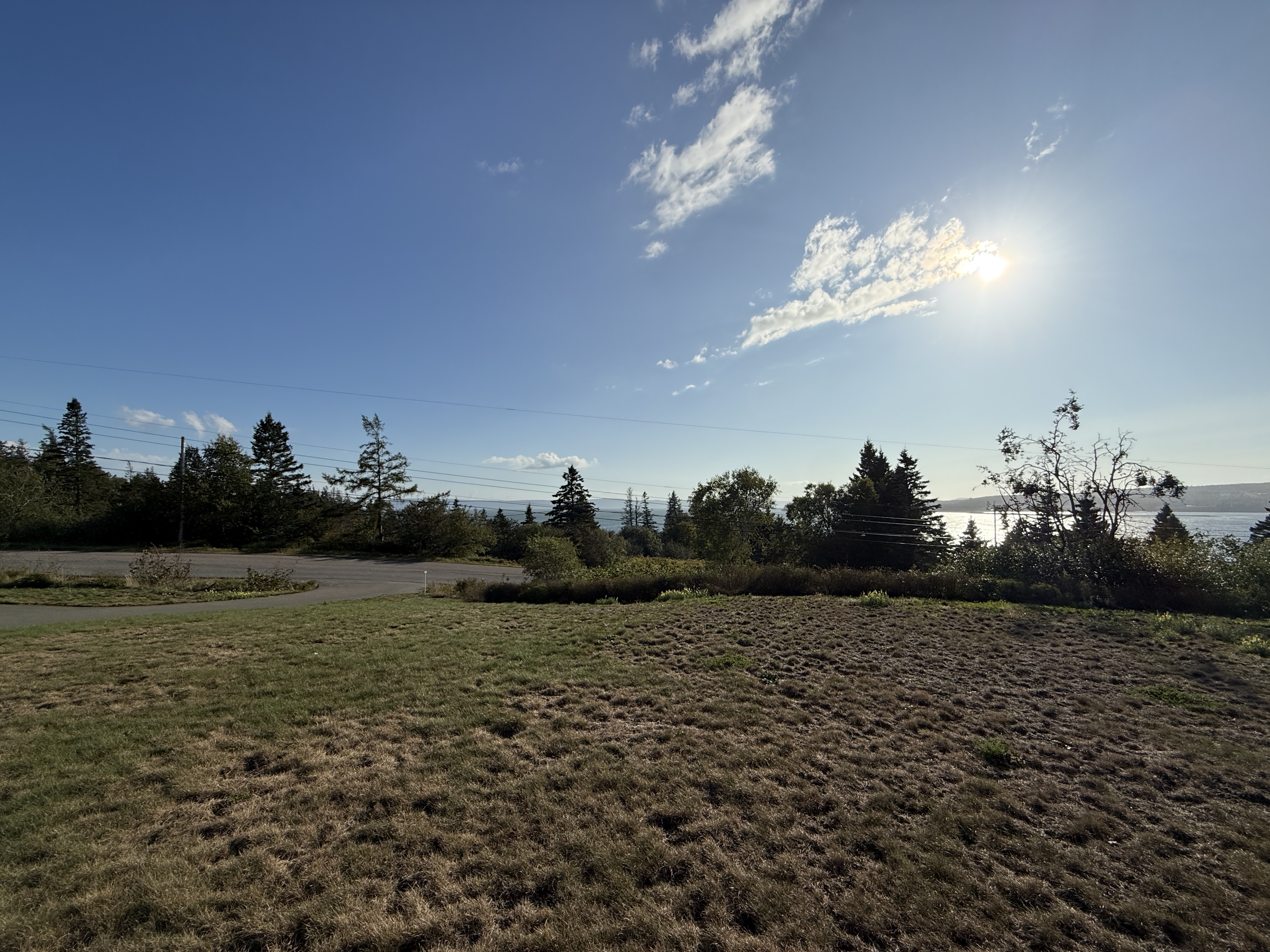
Buying a piece of land in Nova Scotia can feel incredibly simple.
Find beautiful land. Make an offer. Build something amazing.
Except there can be a whole lot hiding between steps two and three.
I work with vacant land throughout Northern Nova Scotia, and if there’s one thing I’ve learned, it’s that two parcels that look almost identical on MLS® can have completely different development potential.
One has a surveyed building lot, driveway, power at the road and documentation supporting septic development.
The other has a gorgeous view and a whole lot of unanswered questions.
That doesn’t necessarily make the second property a bad purchase.
It just means we need answers.
If you’re considering buying vacant land in Nova Scotia, here are the things I want you investigating before you decide what that land is actually worth to you.
1. Start With Zoning
Before getting emotionally attached to a piece of land, figure out what you’re actually allowed to do with it.
Zoning and land use rules can affect whether you can build a home, operate certain businesses, add additional dwellings, create tourist accommodations or pursue other development plans.
And please don’t rely on:
“The neighbour did it.”
“The seller said it should be fine.”
Or my personal favourite:
“There’s lots of land, so I don’t see why not.”
Your intended use matters.
If you’re buying the land with a specific plan, verify that plan with the appropriate municipality or planning authority during due diligence.
2. Can the Property Actually Be Developed?
A 20 acre parcel does not necessarily give you 20 usable acres.
This comes up all the time.
Land can contain wetlands, watercourses, steep slopes, poor drainage, rock, flood prone areas or other physical characteristics that affect where development can realistically occur.
The number of acres is important.
The usable portion of those acres may be considerably more important.
This is especially true when you’re comparing large rural parcels.
Don’t buy acreage.
Buy usable acreage that works for what you’re trying to accomplish.
3. Investigate Septic Potential
If the property isn’t connected to municipal sewer, you’ll likely need an onsite sewage disposal system.
That means the land needs to be suitable for one.
Soil conditions, lot configuration, setbacks, slopes, watercourses and the location of your proposed development can all matter.
Nova Scotia regulates onsite sewage disposal systems, and installation generally involves qualified professionals and the appropriate approval or notification process.
If your entire plan depends on building a home, septic feasibility is not something I’d leave until after closing.
4. What About Water?
No municipal water?
Then we need a water plan.
Depending on the property, that may mean drilling a well or investigating an existing well.
Sometimes vacant land is marketed with an existing drilled or dug well.
Great.
Now let’s figure out what we actually know about it.
Is there documentation?
Where is it?
When was it installed?
Has it been used recently?
Has the water been tested?
What is known about quantity?
The existence of a pipe sticking out of the ground doesn’t automatically tell us everything we need to know about the water supply.
5. Road Frontage Is Not the Same Thing as Legal Access
This one matters.
How do you legally get to the property?
Does it front directly on a publicly maintained road?
Is access over a private road?
Is there a deeded right of way?
Who owns the road?
Who maintains it?
Who plows it?
Are there shared maintenance obligations?
Does the legal access actually reach the portion of the property you intend to use?
A road visible on Google Maps isn’t a substitute for understanding legal access.
6. Look at the Survey
If there’s a survey, I want to see it.
Surveys can help us understand boundaries, dimensions, rights of way, existing lots, roads and other important characteristics.
This becomes even more important when you’re looking at acreage that has already undergone subdivision work.
Sometimes a seller has already invested significant money into surveys, legal work, road development, driveways or creating approved lots.
That work can have real value.
But we need documentation showing what has actually been completed and what remains to be done.
7. Don’t Assume the Property Can Be Subdivided
This deserves its own section.
You find 60 acres and immediately start doing math.
“If I divide this into ten lots…”
Maybe.
But subdivision isn’t simply dividing acreage by your desired lot size.
Subdivision rules can involve minimum lot dimensions, road frontage, access, servicing, road standards and municipal or provincial approvals.
If subdivision potential is part of your investment strategy, investigate it before assigning future lot values to the property.
And if subdivision work has already been completed, find out exactly what stage it’s at.
There’s a big difference between:
“The owner explored subdivision.”
and
“These lots have been surveyed and approved.”
8. Check for Wetlands and Watercourses
That gorgeous marshy area may be beautiful.
It may also affect your development plans.
Nova Scotia regulates activities that alter wetlands and watercourses, so buyers should identify environmental features that could affect where and how they develop a property.
This doesn’t automatically mean land containing wetlands has no value.
It means you need to understand where those areas are in relation to your intended use.
Again, total acreage and usable acreage aren’t always the same thing.
9. Find Out Where the Power Is
“Power nearby” is one of those phrases I want to investigate further.
Nearby where?
At the property line?
Across the road?
Several hundred metres away?
If you’re planning to build far back from the road, bringing electrical service to your building site can become another development expense.
Nova Scotia Power can provide information about new electrical service, but costs and requirements depend on the specific project.
Don’t assume a utility pole visible from the property means your electrical connection will be inexpensive.
10. Think About the Driveway Before the House
Where will you enter the property?
Is there already a driveway or culvert?
Will you need approval for a new entrance?
How long will the driveway be?
What is the terrain?
Does drainage need to be addressed?
Will you need significant clearing, gravel or grading?
A long private driveway can be beautiful.
It can also represent a substantial portion of your site preparation budget.
If the seller has already installed driveways or road infrastructure, don’t overlook the value of that work when comparing the land with a completely raw parcel.
11. Waterfront Land Needs Extra Investigation
Waterfront land deserves its own layer of due diligence.
Look at shoreline access, erosion, coastal flooding, elevation and where a future building site would be located relative to the water.
And make sure we’re clear about the difference between:
Direct waterfront
Deeded beach access
A right of way
Water views
And a public beach nearby
Those aren’t interchangeable.
Nova Scotia also provides coastal hazard mapping and property specific Coastal Hazard Assessment Reports that can help buyers investigate potential coastal flooding and erosion.
If the ocean is the reason you’re buying the property, understanding the coastline should be part of the purchase.
12. Deeded Beach Access Needs to Be Read, Not Assumed
This is another one I see regularly in Northern Nova Scotia.
A property may have deeded access to a beach without owning waterfront.
That can be a fantastic feature.
But I want to know exactly what the deed says.
Where is the access?
How wide is it?
Who else can use it?
Does it run with the land?
Are there restrictions?
Is it pedestrian access only?
Can vehicles use it?
Don’t let the words “deeded beach access” be the end of the investigation.
They should be the beginning.
13. Check Restrictive Covenants
Zoning tells you what government regulations may permit.
Restrictive covenants can add another layer.
A subdivision might have rules concerning things like building size, architectural standards, mobile homes, RVs, commercial activity or other uses.
So even if zoning permits your plan, the property’s title may contain restrictions you also need to understand.
Your lawyer is an important part of this investigation.
14. Ask About HST
Please do not assume HST is or isn’t applicable to vacant land.
The tax treatment can depend on the seller and circumstances surrounding the transaction.
Sometimes HST may apply.
Sometimes it may not.
If the tax treatment isn’t clear, this is something to investigate with your lawyer, accountant or another appropriate tax professional before closing.
On a significant land purchase, that’s not a detail I want discovered at the last minute.
15. Financing Vacant Land Can Be Different
Buying vacant land isn’t always financed the same way as buying a house.
Some buyers purchase land with cash.
Others use different financing arrangements or larger down payments.
Financing can also depend on whether you’re purchasing a serviced building lot, raw acreage or land as part of a construction plan.
If financing is required, speak with your lender or mortgage professional before assuming the property fits your budget.
Your $150,000 land budget doesn’t help much if your financing strategy only works for a different type of property.
16. Find Out What Work Has Already Been Done
This can significantly affect value.
Has the property already been:
Surveyed?
Subdivided?
Cleared?
Graded?
Tested for septic?
Serviced?
Given approved driveway access?
Connected to municipal water?
Developed with roads?
Improved with culverts?
Provided with deeded beach access?
These things cost money.
A completely raw 20 acre parcel and a 20 acre parcel with substantial development work already completed should not automatically be valued the same way simply because they’re both 20 acres.
The work already completed can matter enormously.
17. Get a Lawyer Involved
Your lawyer isn’t just there to hand you the keys on closing day.
For vacant land, title and access can be particularly important.
Your lawyer can help investigate registered interests, rights of way, restrictive covenants, title issues and other legal matters affecting the property.
If there’s something in the deed that affects how you intend to use the land, I want to know before you’re committed to owning it.
18. Build Your Due Diligence Around Your Actual Plan
This might be the most important part of this entire article.
There isn’t one universal vacant land checklist.
If you’re buying a lot to build your forever home, our questions will be different from someone buying 70 acres hoping to subdivide it.
A buyer looking for waterfront land to build a cottage has different priorities from someone who wants agricultural land.
An investor has different questions again.
So before we investigate the property, I want to understand:
What are you actually trying to do with it?
Then we work backward.
Cheap Land Isn’t Always Cheap
A $40,000 parcel requiring extensive site preparation may ultimately cost more to develop than a $70,000 lot with a driveway, survey, septic work and services already in place.
That’s why price per acre can be incredibly misleading.
I’m much more interested in understanding what you’re getting for the money.
Acreage.
Usable land.
Access.
Services.
Development potential.
Waterfront.
Improvements.
Existing approvals.
Location.
Those things together tell us far more than acreage alone.
Buying Vacant Land in Nova Scotia?
I work with vacant land, acreage, waterfront property and development opportunities throughout Northern Nova Scotia, including Colchester County, Cumberland County, Tatamagouche and the North Shore, Parrsboro and the Fundy Shore.
Whether you’re looking for one beautiful building lot or acreage with subdivision potential, my approach is the same.
Figure out what you want the land to do.
Then investigate whether the land can actually do it.
Because the prettiest 50 acres in Nova Scotia aren’t much help if they don’t work for the reason you bought them.
Rachel Thibodeau, REALTOR®
RE/MAX COUNTY LINE REALTY LTD.
902 890 4211
reachrealtorrachel@gmail.com
rachelthibodeau.ca
@novascotiarealtorrachel
Strategic Guidance. Genuine Care.